
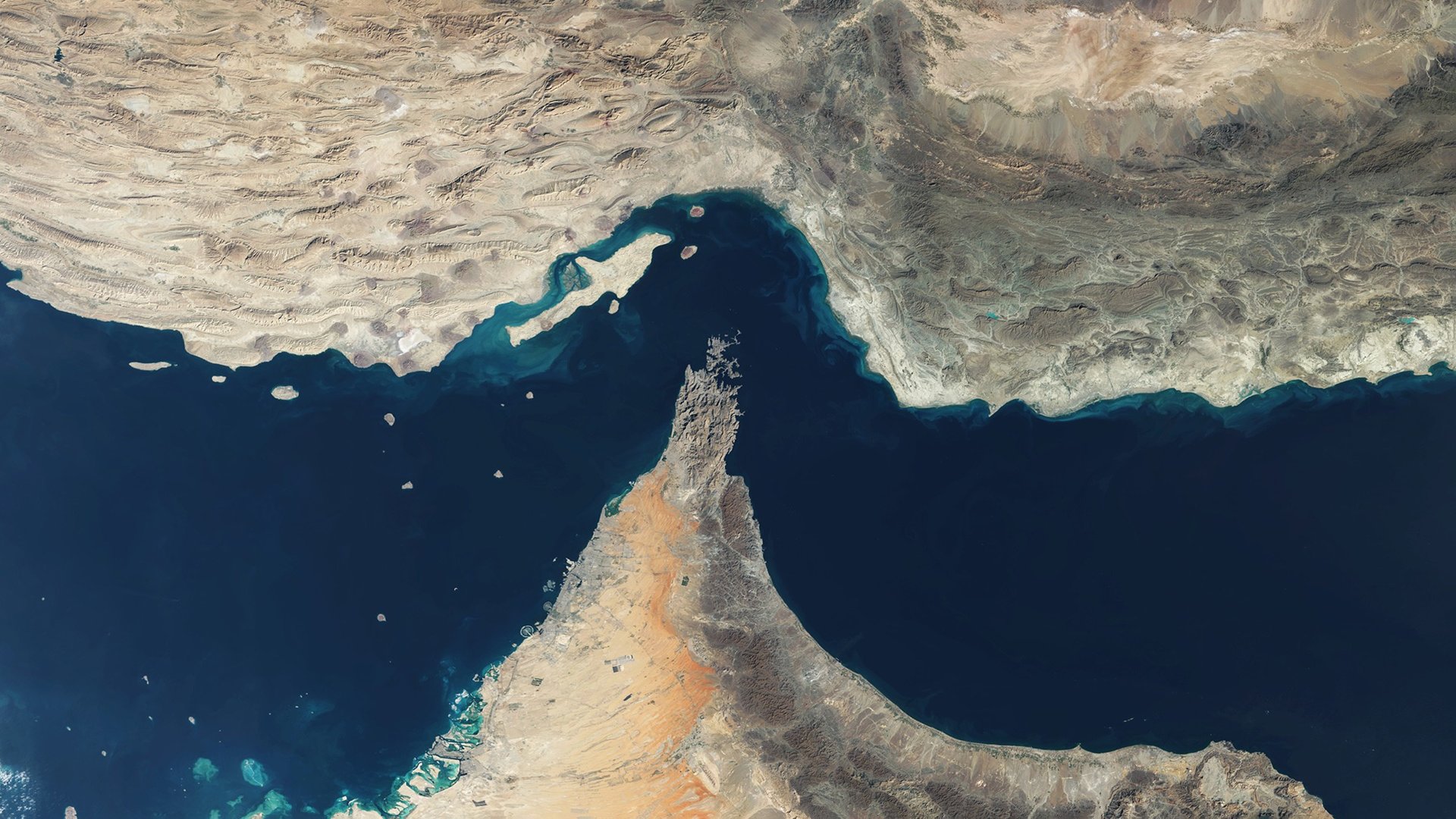
The World’s Narrowest Economic Throat: The Strait of Hormuz in 2026
If the global economy has a "jugular vein," it is the Strait of Hormuz. This narrow, hook-shaped stretch of water separating the Persian Gulf from the open ocean is just 33 km wide at its narrowest point, roughly the distance of a morning commute in a major city. Yet, as we’ve seen in the opening months of 2026, when this "vein" is squeezed, the entire world feels the pulse.
Why is everyone so obsessed with it?
It’s not just water; it’s a liquid gold conveyor belt.
The 20% Rule: About one-fifth of the world's total petroleum consumption passes through this tiny gap every day.
Energy Monopoly: It’s the primary exit route for oil and Liquefied Natural Gas (LNG) from Saudi Arabia, the UAE, Kuwait, Iraq, and Qatar.
No Easy Detour: Unlike a blocked road where you can take a side street, there aren't many pipelines that can bypass the Strait. If the "throat" is squeezed, the energy flow stops.
The History: From Spice Routes to "Tanker Wars"
Control over this waterway has been the ultimate geopolitical prize for centuries.
The Golden Age of Hormuz (10th–15th Century): The Kingdom of Hormuz was once so wealthy and influential that explorers said, "If the world were a ring, Hormuz would be the jewel in it." It controlled the trade of spices, horses, and pearls between India, China, and Europe.
The Portuguese Conquest (1507): Recognizing its strategic value, the Portuguese explorer Afonso de Albuquerque seized it. They built massive forts (some of which you can still see) to tax every ship heading toward India. They held it for over a century until an Anglo-Persian force kicked them out in 1622.
The "Tanker War" (1980s): This was the modern turning point. During the Iran-Iraq War, both sides began attacking each other's oil tankers in the Strait to choke off the other's economy. This forced the US Navy to start escorting tankers, setting the precedent for the heavy military presence we see today.
Who Actually Controls It?
Control is a mix of geography, international law, and "who has the biggest guns nearby."
1. The Literal Border: Iran vs. Oman: The Strait is bordered by Iran to the north and Oman (specifically the Musandam Peninsula) to the south. Because the water is so narrow (33 km), the territorial waters of both countries actually overlap in the middle.
2. The Transit Passage Rule: Under the UN Convention on the Law of the Sea (UNCLOS), the Strait is an "International Strait." This means even though the water belongs to Iran and Oman, ships from all over the world (including military ones) have the right to pass through as long as they are moving quickly and not being hostile.
The Twist: Iran has signed but never fully ratified this treaty. They argue they only have to allow "innocent passage," which gives them more legal wiggle room to stop or inspect ships they don't like.
3. The Enforcer: The US 5th Fleet: While Iran and Oman are the "landlords," the US 5th Fleet (based nearby in Bahrain) acts as the self-appointed security guard. They patrol the area constantly to ensure the Transit Passage rule is followed. This is why you often see "cat-and-mouse" games between Iranian speedboats and US destroyers.
The 2026 Crisis: Why Would Iran Stop It?
As of March 2026, the Strait is facing a "virtual closure." Following military strikes that targeted Iranian leadership earlier this year, Tehran has pivoted to its ultimate leverage: asymmetric disruption.
"If we can't export, nobody can": Iran uses the Strait as a "poison pill." By deploying an estimated 6,000 sea mines and using swarms of armed speedboats, they have made the area "uninsurable."
The Invisible Blockade: You don't need to sink every ship to stop trade. By attacking just a few vessels, Iran has caused insurance premiums to skyrocket, forcing major shipping giants like Maersk to suspend all transits.
The India Impact: It’s Personal
For India, the Strait isn't a "foreign problem"- it’s a "kitchen budget" crisis.
Energy Security: India imports nearly 90% of its crude oil, and roughly half of that (around 2.5 million barrels per day) comes through this 33-km gap.
The LNG Trap: About 60% of India’s Liquefied Natural Gas (LNG)—used for cooking gas and industry—comes from Qatar via the Strait. Unlike oil, there are almost no pipelines to bypass the water for gas.
The Price Tag: Brent crude has already surged past $100–$120 per barrel this month. Every $10 increase adds billions to India’s import bill, leading to higher petrol prices, more expensive groceries, and a weaker Rupee.
Conclusion: A Chokepoint That Can’t Be Ignored
As we navigate the uncertainties in 2026, one thing is clear: the Strait of Hormuz remains the ultimate "pressure point" for modern energy supply chains. It is a place where a single sea mine can dictate the cost of a commute in Delhi or the price of heating in London. For Iran, the Strait is more than a waterway; it is their most powerful non-nuclear deterrent—a "poison pill" they can use to force the world to the negotiating table. For the rest of the world, it is a reminder of the fragility of our global energy dependence. The takeaway for India? While we’ve made strides in diversifying our energy sources—pivoting back to Russian crude and exploring West African oil—the Strait remains an inescapable bottleneck. Until the world truly transitions away from fossil fuels, these 33 kilometers of water will continue to hold the global economy’s pulse in its hands. The current 2026 standoff isn't just a military conflict; it’s a high-stakes stress test for a world that still runs on the liquid gold flowing through this narrow Iranian gate.